[ Hasegawa ]


Kawasaki T-4 jet trainer in 1/72 scale by Hasegawa
page 1
page 2

The Kawasaki T-4 is a subsonic jet trainer developed in Japan for the JASDF to replace the T-33 and the Fuji T-1. Kawasaki was selected in 1981 as lead company for MT-X program. It is a shoulder-wing design with a student and trainer pilot cockpit and powered by 2 Japanese Ishikawajima-Harima F3 turbofans. First prototype flight was July 1985 and deliveries toi the JASFG started September 1988. Some 200 jets were manufactured. It still flies today with many "Hikotai" at various JASDF air bases.
Some data: wingspan 9,94 m. Length 13,00 m. MTOW 7,500 kg. Max speed some 1,038 km/hr at low level and MACH 0.9 at 10,000 feet. It has 4 wing hardpoints for practice bombs and fuel tanks but otherwise unarmed. A central fuel tank can also be carried.

In 1/72 scale Hasegawa came with a first T-4 kit #1006 around 1989 with about 60 parts. It had a bad fit and was made ages ago as seen here.....
Thankfully, a better 1/72 Hasegawa kit made a new mould that came in several releases with different decals for JASDF jet trainers.

This later T-4 kit has been released in the dozens... with different attractive decals. Painting the particular T-4 scheme and setting the decals is the most time consuming when making a model.


The canopy can be set open but the central blast screen is not provided.


This later new mould Hasegawa T-4 kit in 1/72 scale came in 1996 and has about 66 parts. The plastic colour varies per kit release but can be white or light grey. The hard plastic is the usual Hasegawa and the clear parts look fine.
The parts are simple and there is not a lot of detail, typical of a 1990s kit. Cockpit is simple but with seats, panels and decals are provided for the instrument panels. Main canopy and wind screen are separate parts. The transparant blast screen in the canopy is missing, make from scrap particularly if you set the canopy tilted open. (in the Hasegawa 1/48 scale T-4 kit this blast screen is provided along with 2 pilots).

No nose weight is needed. The 2 intakes are a bit undeep, paint the inside flat "wall" area black to suggest a deeper intake tunnel. The 2 jet exhausts are deep but quite small.

You get 2 wing fuel tanks but the often seen shorter central tank is seen carried and that is not provided in the kit.
The kit fit is OK but needs some putty and sanding, particularly at the intakes, lower belly and the wing joints.
It depends a bit of the kit's year of manufacture but some dents/ shrinkage may be present near the anti-glare panel..... Also, the decals have a different quality as to come loose from the decals sheet, some take a long time to release and others tend to break up. It is a good idea to do a small try out with a spare decal (or use the decal with the Hasegawa logo on the sheet). If the decal breaks up, apply a decal film coverage first.
Quite some kits were made of different releases....

Hasegawa T-4 kit #00846 released in 2007 has markings for 2 schemes for JASDF 1st Wing 50th anniversary. It is the later kit, see notes above...


Assembly is straight forward and takes less than an hour. After assembly some putty and sanding was needed. Polish the surfaces when done to avoid scratches in the paint covering.


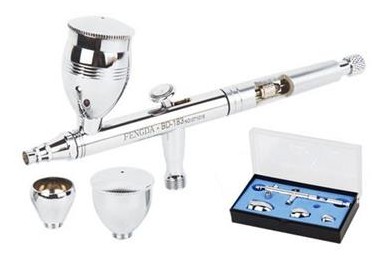
Any pylons were not yet installed but the flap fairings were set next. A base grey coat was airbrushed with my favourite Revell steingrau H75 Aqua acrylic. Thin at least 60% with distilled water with some drops of IPA.


Do not yet install the gears, antennas and smaller bits. And do not install yet the tail antennas #G11, do after any tail marking decals have been applied.
After the base grey has been airbrushed, correct any still visible errors with putty and again sanding.
Kit scheme 2 was picked for 32 TSQ with the red tail markings.
The model was airbrushed overall grey FS36375 JASDF scheme with Gunze Sangyo Mr.Hobby H308 acrylic.
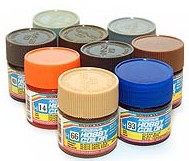
The orange tips are provided as decals but I opted to paint these instead with Gunze H14. The vertical tail was painted white as it would get a new decal.

This was an older kit release and in my kit the tail decal was a bit yellow in stead of white. I scanned the decal, with photo software, than isolated the tail markings, edited to remove the white areas and printed the rest of the coloured tail decal myself on clear decal sheet with my laser colour printer.


The kit decals were thus combined with some of my own decals. My decals are on a continous decal film so each decal needs to be cut out with fine scissors.
The walk way lines on this scheme are medium grey and the NO STEP markings black as per kit decals. Note that other T-4 schemes may show different colours for these.

After decalling, the rest of the parts like landing gears were installed.

The installation of the main gear needs care: the main struts #G5 are at 90 degree angle spanwise and the door struts #G4 are again at 90 degree angle to the main struts. There is a very tiny gap in strut #G5 to install #G4. The forward main gear doors are slightly still open on a parked T-4.
To set the main wheels #G6, I drilled open a bit their locator holes.
From the nose gear strut #A1 I reduced the base stubs in order to set in the nose gear bay.
The oleos of the gear struts got a chrome painted area using the Molotow liquid chrome marker pen.

The smaller antennas were set and painted.
The kit seats got grey frames and red cushions. Some straps were made from tape slices. On the front seat a small yellow breaker was seen and it was made from yellow stretched sprue from the spares box.
The tail antennas #G11 were installed and the aluminium painted small jet exhaust pipes. The small panels at the tail base are off white/ light grey.

The kit nose pitot part #D12 is very vulnerable and I replaced it with a bit of a metal needle. This was set with superglue and most of it was painted black except the pitot opening tip.

The canopy was to be set closed and only a bit of the missing blast shield in the canopy was made from transparant sheet and fixed with Humbrol Clear Coat that will dry clear.

The stabilizers were installed quickly and are at a slight dihedral. The canopy was now set closed on this model and fixed with white glue. Paint any gaps with a fine brush grey when dried.
The anti-collision lights at the wing tips were painted red port and blue starboard. At the rear fuselage end silver as well as on the vertical tail on both sides.


The model than got a few coats of gloss varnish with Johnson Future/ Pledge thinned with 10% Gunze Sangyo levelling thinner. This will protect the decals and gives an even sheen, shield off the clear parts.

That completed this nice T-4 in 32 TSQ scheme JASDF 1st Wing 50th anniversary based at Hamamatsu air base west of Nagoya.


Later on, the external wing fuel tanks were installed.
Also, a central fuel tank was made: another kit spare wing fuel tank was reduced in length 4 millimeter at the rear and so has no rear fins. Close the rear gap. Also the small central pylon was made from card. Paint and install.
At the lower fuselage belly aft of the main gear bays 2 small drain pipes ? from red stretched sprue were set (kit parts #G10 are too big).


Hasegawa T-4 kit #02210 released in 2016 has markings for JASDF 11 aerial demonstration squadron Blue Impulse jets. This DUO release has 2 kits.

- Scheme 1 does not have the Blue Impulse scheme, I suppose it is the squadron's extra trainer aircraft in grey. The tail and fuel tanks have special Blue Impulse markings.
- Scheme 2 has indeed the JASDF Blue Impulse aerobatic demonstration team scheme and decals for several team jet codes 1-6 with serials.

The kit plastic is white in this release. Of Blue Impulse scheme 2 the lower fuselage and wing needs to be painted blue.
One kit was made of the Blue Impulse of scheme 2.
Model assembly was done as usual (see notes above).

I used white Alabastine putty that after sanding was hardly visible. So no grey base coat was applied. Directly a light coat of gloss white with Gunze Sangyo Mr.Hobby H1 acrylic was airbrushed over the white plastic.

The lower fuselage and wing areas were airbrushed blue after masking. I used Gunze Sangyo Mr.Hobby H15 blue acrylic although Hasegawa suggests a mix of Gunze paints.

The decals for jet Blue Impulse number "4" were set from the kit and took a long time to get from the sheet in water. For the spine, wing and tail blue areas the decals were used. Before setting the spine decal, remove the raised bit on it. The decal sizes are quite accurate.

The rest of decalling was done. Next, the cockpit interior was hand painted FS36231 gray with Gunze Sangyo Mr.Hobby H317 as per instructions. Note that the central cover is not black but dark grey.


After decalling, the rest of the parts like landing gears were installed. The forward main gear doors are slightly still open on a parked T-4. Smaller bits like anti-collision lights, pitot and drains were set as described for the model described above. See notes above....
The kit seats got grey frames and red cushions. Some straps were made from tape slices. On the forward seat a yellow bar was set made from yellow stretched sprue. The wind screen frame was hand painted and it fits OK.
Finally a gloss clear varnish was airbrushed with the usual technique of Johnson Future/ Pledge thinned with 10% Gunze Sangyo Mr.Color Leveling thinner. Adding a few drops of their Gunze Mr.Color Levelling thinner helps when airbrushing. (it seems the leveling thinner is lacquer! but a few drops really help levelling).
The canopy was to be set open and the missing blast shield in the canopy was made from transparant sheet. Also the lower blast screen frame was made from black sprue. A pair of mirrors were also set made from bits of etched metal fret.

All was installed.

A nice JASDF Blue Impulse T-4 model is now in the collection. The team is part of 4 Wing "Kokudan" with their 11 squadron "Hikotai" based at Matsushima air base in the Sendai area on the east coast some 350 km North of Tokio.


... set in a scenery... on a visit to Hamamatsu.

I later saw that for ferry flights to other air bases for aerial demonstration flights, external fuel tanks are carried. These are provided in the kit and photos below show these installed.


The next 1/72 Hasegawa T-4 followed....

Hasegawa T-4 DUO KIT release #02142 in scale 1/72 of 2015 includes 2 kits with 60th Anniversary PART 2 markings for:
[1] JASDF, 13FTW with 60th anniversary special marking with code: 789 as seen at Ashiya air base in November, 2014.
[2] same but with code: 806 and different tail colour.

The decals sheet is spectacular and accurate in this DUO 2 kit release #02142.

For even the nose area red/orange decals are provided but it is better to mask and airbrush some areas.
Scheme for the JASDF T-4 coded 789 was picked.
Model assembly was done as usual (see notes above).
After puttying and sanding rather directly, a coat of gloss white with Gunze Sangyo Mr.Hobby H1 acrylic paint was airbrushed over the white plastic.

The leading edges of the wing, tail and stabilizers were pre-painted red with Gunze Sangyo Mr.Hobby H23 red acrylic as were the nose and spine areas. The rest of the red areas were covered with the decals.

The Hasegawa decals took this time a long time dipping in luke warm water bath to get from the sheet. Even for a relatively new kit release.

NOTE: Unfortunately, very old Hasegawa decals tend to become unusable as they break up. If you build a very old Hasegawa kit, some liquid decal film should be applied to avoid breaking up; each decal than needs to be cut-out separately. So it is a good idea to do a small try out with a spare decal (or use the decal with the Hasegawa logo on the sheet). If the decal breaks up, apply a decal film coverage first.


Decalling takes a few hours. The decal do fit but some DACO decal softener was used the the intakes.

After decalling followed installment of landing gear, cockpit details etc. In a similar fashion as described earlier.
The model got a gloss varnish coat airbrushed and the canopy after it had a smaller blast screen made installed closed. Pitot was made of metal needle bit and most of it painted black.
The anti-collision lights at the wing tips were painted red port and blue starboard. At the rear fuselage end silver as well as on the vertical tail on both sides. At the lower fuselage belly aft of the main gear bays 2 small drain pipes ? from red stretched sprue were set (kit parts #G10 are too big).
Two external wing fuel tanks with their pylons were also installed.

T-4, coded 06-5789, training wing "13 Hiko Kyoikudan", squadron "1 Hikotai" based at Ashiya. This base is between Kitakyushu and Fukuoka.


... set in a scenery on a visit to Iruma...


More T-4 models to follow. Keep watching this modelling report.
REFERENCES
Books:
- T-4: Air International magazine, Volume 30, page 102
- Wings Mook, 50 aniversary of JASDF, ISBN 4-87149-627-9, Japan
Internet:
Many photos! Just search!
Kawasaki T-4, Meindert's Japan trip Walk Around at IPMS.NL
Back to 1/72 Models

(c) Copyright Meindert "designer"/ All rights reserved. Your comments are welcomed by webmaster
Created this page Feb 6, 2026